“In my first job out of college, the CEO told me something that stuck with me: “your ability to lead is only limited by your willingness to have awkward conversations”… the more early-career people can get comfortable doing that, in a way that’s thoughtful and diplomatic and reads the situation and moves things forward, the better.”
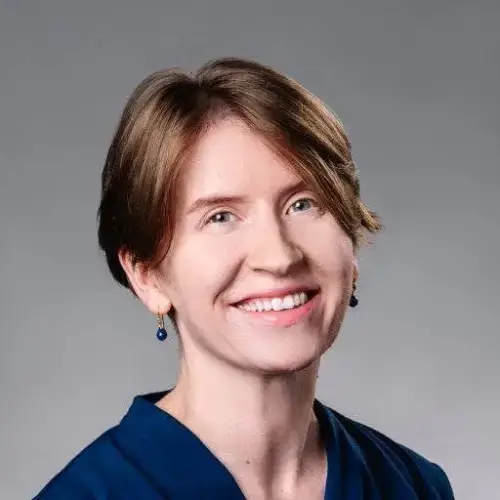
Laura Clancy currently works at the School for Moral Ambition, where she is building a fellowship placing students from elite US colleges into high-impact nonprofit summer internships.
But before this role, Laura spent years building and scaling mission-driven organizations. She got her start in nonprofit fundraising straight out of college, then worked in a host of high-level roles in the nonprofit space, including at one of the largest charter school networks in Philadelphia, where she led the effort to safely reopen schools during COVID.
Could you give me a bird’s-eye view of your current role at the School for Moral Ambition?
My role at the School for Moral Ambition is to stand up new programming in the U.S., with a focus on elite universities. When I started last fall, we knew we wanted to launch a fellowship for Harvard juniors who were top talent and interested in summer internships at high-impact nonprofits, with full, competitive funding from the school. And it’s really taken off.
Part of that comes from lessons I’d learned about on-campus recruiting: how to competitively position yourself and create a compelling value proposition for top talent. We ended up with 8 percent of all Harvard juniors applying within two weeks of starting the fellowship, and we selected an incredible array of leaders who are already having a tremendous impact. We’ve also secured funding to replicate at Princeton in the fall, and we’re hoping to fund replication at Brown, Stanford and elsewhere.
I’ve been a long-time fan of Rutger Bregman [author and co-founder of the School for Moral Ambition]. What really attracted me to this role is that I wish something like it had existed when I was an undergrad. A lot of the career choices I made were about luck, not about having a predictable machine that optimizes for top talent going to great places.
So I was excited about creating more opportunities for Harvard students and about changing the conversation on campus, so that students who see themselves as ambitious aren’t only thinking of ambition as banking, consulting, or tech jobs. They start to see high-impact nonprofits as a much more intellectually exciting and substantive way to begin a career.
Looking back, is there a common thread running through your career, even without a grand plan?
There are two things I’ve always cared about in my work. One is evidence. It’s much easier now to be someone who lights up about the results of a great RCT and uses that in a job search. But I’ve always tried to do some version of that, working at organizations with a strong evidence base.
The second theme: do you remember that Netflix show with Marie Kondo about tidying up? There was a famous meme of her saying she loves mess. I like mess. If there’s a fire, I want to be the person who puts it out. It turns out that’s a beloved trait. If you get good at putting out fires, at figuring out which messy, undefined projects are really critical and then structuring them, moving them along, and getting to resolution, you can advance pretty quickly. I accelerated in the positions I had partly because I saw them as learning and growth opportunities. I found them interesting and exciting rather than scary.
How did you discover that was a strength of yours?
My first job out of college, I moved home to Philadelphia, and I knew I wanted to work at a big organization. Randomly, the national headquarters of the largest mentoring group in the U.S., which had just completed a beautiful RCT that’s still the gold standard in youth development (Big Brothers Big Sisters’ national office), was hiring for someone on their fundraising team.
I got to my interviews and asked who I’d be meeting with. They said, “We just fired the entire team. We’re in negotiations for the largest unrestricted gift in our history. The team was fired because they really messed it up, so we need someone who can help us fix it, and you’d report directly to the CEO.”
I was about 21. It was probably a terrible idea for them to hire me by any measure; I’d never done anything like that before. But I learned quickly that what made the difference in cleaning up the mess was being meticulous about relationship management and documentation. I actually didn’t meet the corporate partners in person for a long time on purpose, because I didn’t want them to realize how young I was.
We ended up getting the largest donation in the organization’s history. The CEO is still one of my big mentors, and I learned so much in those two years. She told me I should go to business school. She was a Wharton alum who sat on the Wharton Board of Overseers, and she said, “Keep your growth trajectory as steep as possible. You’ll skip a couple of steps if you go to business school, but you shouldn’t pay for it.” That’s how I ended up at Columbia, where they were kind enough to give me full funding.
Asking major donors for money sounds nerve-wracking for anyone, never mind a fresh graduate. How did you approach it at first?
As an undergrad, I’d been involved in a capital campaign that Harvard was running, so I was relatively comfortable. Part of it was my mindset: the organization and cause I work for is incredible and deserves all the funding it can get. Because I tied that to the evidence base, I could translate it clearly. If we have three million dollars more in funding, here’s the growth and here are the outcomes that will result. It was a predictable, linear relationship, so it was much easier to sell.
Honestly, one of the real blessings was having mentors who’d worked in higher-education fundraising. They taught me, and they’d roleplay and practice with me if I asked. A lesson I learned early is that mentors are so important: don’t just ask for advice, ask to practice. Mess up with them, so that when you’re actually in the meeting making the ask, you can nail it.
Readers are probably familiar with practicing for job interviews. But it sounds like there’s value in practicing for other kinds of conversations, too.
Totally. There are really two things: making a fundraising ask, and having difficult conversations around people management. Practicing a conversation where you give someone hard feedback, or frankly fire them, is a key unlock that more people should take advantage of.
You went on to work at Bridgespan, which spun off from Bain to serve nonprofits and foundations. What did that look like?
What I loved is that at any given time you’re typically working on two client cases. Most of my time there was right before the 2008 bubble burst, so there was money growing on trees and everybody had a growth plan. It was very ‘fizzy’, and I worked with a lot of amazing organizations, many of whom I kept working with and still have good relationships with today.
Things changed dramatically in 2008 and 2009. Organizations that had started with growth plans were suddenly saying, “All our donors are pulling back, the bubble has burst, now we have to figure out contraction and how many people to lay off.” That’s fundamentally much less compelling work. It’s a shallow thing to say, because it’s much harder to be a leader at that point, or to be someone affected by the layoffs. But the nature of the work changed very quickly, and I realized I like growing things, and this was fundamentally not about growing something.
So although I wasn’t looking for it, I was offered the chance to run an AmeriCorps program in the same city, and I took it. It’s second nature for me to want to grow things, and the thought of being somewhere I’d be helping organizations contract was deeply painful.
That was your first time leading an organization. How did you end up making that step?
I loved the program. It was government-funded, and we placed high-potential young people, typically right out of college, into nonprofit back-office jobs to build the organizations’ capacity. It was great for the organizations, because they got a talented young person with significant federal support and didn’t have to manage a federal grant themselves.
The fundamental mistake I made in that role is that I was dating, and then engaged to, someone in academia and didn’t expect to have to move so soon to be in the same place. Personal relationships factor into job planning far more than we often talk about. He was in a PhD program at Harvard, but then he got a tenure-track job outside New York City right away.
So, I had to move to New York. Making that transition, I was kicking myself, but I decided the main thing I wanted was to work in an organization that was scaling and growing, with a boss I’d learn a ton from. I thought, I’ve had so many remote, scattered bosses over the last few years; I really want one person I adore and can learn a lot from. Which I did.
You knew you wanted a role in New York. How did you go about finding one?
I asked a lot of people, “If you could work for anyone in the New York City nonprofit space, who would it be?” Only one name came up more than once: a woman who now runs a big ed-tech company. She’s incredible: a Rhodes Scholar, a Yale Law grad, brilliant, and one of the kindest people I’ve ever met. She was determined to scale quickly and get significantly better educational outcomes for low-income kids in New York City, Connecticut, and eventually Rhode Island. So I became her chief of staff.
I was chief of staff there for five years. I quickly took on oversight of talent, so I ran the recruitment and HR teams, and I supported the executive team in prioritizing better. I learned that what I love most is being helpful. I love working with people I really want to succeed. If you adopt that mindset early in your career, wanting the people around you to thrive, it transforms everything. Sometimes you want them to thrive in a different role, or even at a different organization. But starting from a genuine desire for people to succeed changes everything.
My advice to people interested in chief-of-staff roles is: if you don’t like variety, don’t do it. If it bothers you to do 20 different things in a day, it’s not the job for you. Chief of staff means chief of stuff. But if you enjoy that and can turn it into a game, figuring out how to get better at every single thing while managing the variety, you’ll do great. So, I really loved that work.
So what pulled you away from a job you loved into this next role?
One of my colleagues at the time called me one morning and said, “Would you meet me for breakfast?”. We had breakfast and she said, “I don’t want you to leave, but there’s a job in your hometown of Philadelphia that I think you’d love, with a really special organization.” I wasn’t looking to leave, but it was a Chief Talent Officer role at the largest charter school network in the place where I grew up.
What I loved about their approach was that it wasn’t about building shiny, expensive new school buildings staffed with brand-new 22-year-old teachers. It was about making existing neighborhood schools really good. I found that inspiring, and I loved the founder and CEO. I wasn’t looking to leave, but the more I thought about it, the more I realized it was the right move. My husband loves Philly, my kids were little, and it was nice to be near family. So I thought, “let me try this job” and moved there for four terrific years. I told our board I was going to move back to New York City, and then COVID hit.
What was it like working in the school system during COVID?
What became clear quickly was that in the Philadelphia area, in a way that mirrored much of the country, some schools could stay open: the wealthy boarding schools had doctors on staff and weekly PCR testing. Meanwhile, low-income kids in the area were expected to stay home and get frankly terrible remote instruction for more than a year.
So I told the board, “If you want me to, I really think I can help us become a national leader in reopening school buildings safely.” I had a random collection of relationships. The health commissioner overseeing pediatric health in Philadelphia was a college classmate and good friend, so we could have honest conversations. I knew the local children’s hospital well; they were operating all the testing centers. And I was more familiar with the science behind infection-control protocols than most people. So I pitched the board: “I really think I can reopen our buildings quickly, if you want me to.”
What was the driver for taking that on?
What pissed me off most was that it could be done. The rich kids were staying in their boarding schools. When I networked into talking to the doctors there, they’d say, “Yeah, we have biweekly PCR testing.” Meanwhile, to give you a sense of how poor the public health infrastructure was in Philadelphia: if it was a Sunday and your kid needed a COVID test, there was literally nowhere in the city to get one. The whole thing was designed to be as bureaucratic and un-family-friendly as possible. Seeing the contrast between what rich kids were getting and what our kids were getting really pissed me off.
Longer-term, I thought about how to use the crisis to build closer relationships with our families. All our schools had weekly PCR testing, which families loved; they felt much more confident coming into the buildings because of it. We dramatically improved our ventilation and had well attended vaccination clinics at our schools. I felt the same about the staff. I wanted them to be able to say their bosses did the best job of anyone at keeping them safe during that time, even though they were being asked to teach in person.
You’ve also spent a lot of time in philanthropic roles. What’s it like working in an organization that gives out funding compared to ordinary nonprofits that are seeking funding?
The main difference is that the bar for excellence is self-imposed. You don’t get good feedback loops unless you’re very intentional about it as a philanthropist, and that really sucks. There’s a saying that the day you go into foundation work is the last day you wear an ugly tie; everyone tells you how good you look. I think that’s true, and unfortunately, especially in the current funding environment, there’s an even more heightened power imbalance between people seeking funding and people in a position to give it. That’s really unfortunate, because at the end of the day, foundations achieve their mission by giving money to other organizations. They can’t achieve their legal and ethical goals without nonprofits to grant to.
I’ve also done small-scale consulting on the side, mostly with philanthropists. Usually it’s people who see me as relatively well-networked and as someone who wants them to succeed. They’ll say, “I have a specific thing I’m trying to figure out.” It’s not big-picture strategy; it’s, “Help me figure out who to contract with for this,” or “Help me figure out what to do differently here.”
Sometimes people assume it must be a sexy strategy, but it’s not. Running a foundation is, in many ways, very different from running an organization, but there are still fairly straightforward problems to solve. And again, if you’re not intimidated to build relationships, and you want people to succeed in their work, you’ll have people coming to you for help solving the problems they face.
Zooming out a little, most of your roles have involved high-level strategic decisions. What things might indicate whether someone’s a good fit for that kind of work?
It’s funny. In my first job out of college, the CEO told me something that stuck with me: “your ability to lead is only limited by your willingness to have awkward conversations”. I think that’s a strong behavioral indicator that you can absolutely flex and grow in. Are you willing to jump in and say something awkward or difficult, or to challenge? The more early-career people can get comfortable doing that, in a way that’s thoughtful and diplomatic and reads the situation and moves things forward, the better.
The second thing, as I mentioned, is the mindset of wanting the people around you to be wildly successful. People sense that. They hear it in the language you choose and the help you offer, and in your ability to cultivate relationships. Every morning I spend five to ten minutes thinking: is there an article in the New York Times that someone I used to work with would enjoy? Have I been missing talking to someone? Then I send off five to ten little messages, like, “I was just thinking about you,” or “Did you read this book”.
I don’t just think about people; I actually reach out and keep those relationships alive. So when I need something, or want to ask someone to be a reference, it doesn’t come out of nowhere. That kind of intentional attention to relationships is really critical.
Explore further
Want to figure out how to have more impact in your own career journey?
Check out these articles and resources.