“I think that people do big things by taking risks, by starting their own thing, or by moving to a smaller org, or just doing something that you’re really passionate about… I would encourage people to do it, especially when you can, when you’re young, and you have fewer constraints, because I do think the upsides can be really dizzying.”
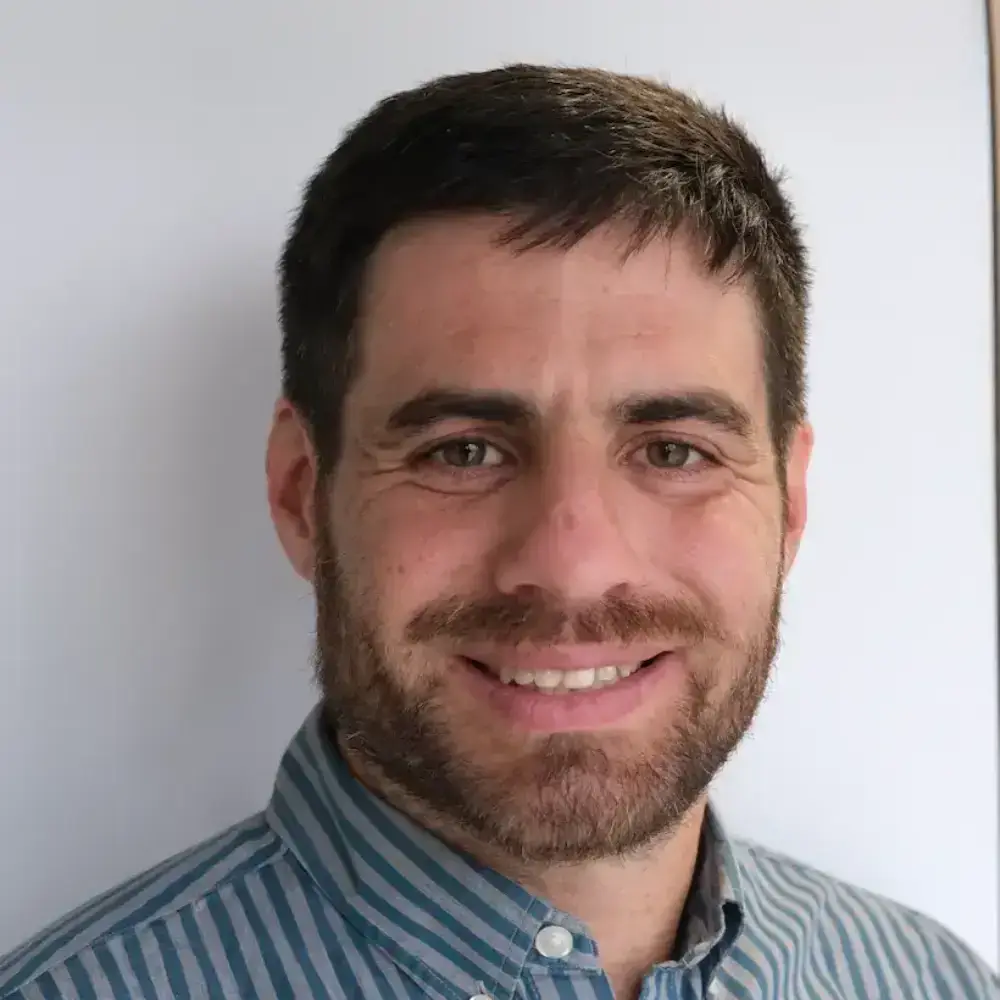
Dan Stein is the Founder and Executive Director of Giving Green, a research and advocacy organization that identifies impactful opportunities for donors to fight climate change. But before starting his own organization, Dan had an extensive background in development economics, which involved completing a PhD before taking on a role at the World Bank. He left this role to join a new organization, IDinsight, where he served as Chief Economist and had the freedom to work on Giving Green alongside his day job.
We had the pleasure of chatting with Dan about his career journey thus far. We cover a wide range of topics, like how Dan navigated career transitions between very different organizations, the benefits of taking calculated risks with your career, and how he built Giving Green while still working full-time at IDinsight.
Could you tell us about Giving Green, and what your current role entails?
I’m the Executive Director of Giving Green, a research and advocacy organization. We do research on what we think are the highest-impact ways that donors can fight climate change, and then we publish that research and try to push money towards those organizations and initiatives that we think are doing excellent work. What that means is we work with donors, we work with other organizations in partnership, and we also run a growing fund, so we sometimes act a bit like a foundation, in that we have a grant portfolio and make grants.
So, what does this mean day-to-day? Well, I’m the executive director, which means I have my hands in all pieces of what the organization does. Day-to-day, I might be weighing in on a research product; maybe a researcher has suggested that we start working in a certain area, or has written a draft of a strategy, and I’ll be reading it and discussing it. I’m involved in our communications side, which might mean doing an interview with a journalist, planning an event, or talking about our new media strategy or advertising strategy.
We were part of a larger nonprofit, IDinsight, and we recently spun off, so now we are doing all of our own operations, which means HR, finance, and also grantmaking. We have a new operations team working on that, and I’m also involved in overseeing that work.
Given your background is in economics and you have a PhD in the field, is it strange finding yourself doing all these operational and organizational tasks? Is this something you anticipated, or did it take you by surprise?
I think it took me by surprise a little bit. I mean, it’s funny, I’ve always been able to say, ‘What do you do? I’m an economist’. But I can’t really say that anymore. I don’t feel like my day-to-day is being an economist. Certainly, the thinking of an economist comes through in the research, but we’re not using traditional tools of economics to do our day-to-day research. It’s more various types of quantitative and qualitative work.
I didn’t have a hunger to do operations and communications, but I did, for a while, have the ambition to have my own thing. And I wasn’t really sure what that would take. I took a crack at it a couple times until I finally found something that stuck. And I guess my ‘thing’ now is running a nonprofit, and I do like running a thing. Part of running a thing means you have to have some sort of eye on all the different pieces of that thing. And I think the best way to do that is to know your strengths and weaknesses and try to hire people who are better than you at the parts you don’t really know. Like, I know a little bit about operations, but it’s not a strength. So I’m trying to get a new team in place and have them be very strong, and then hopefully I won’t have to do as much work on that side.
Hiring great people can be tricky, right?
It is, but I actually think it’s one of the most important things you do as the leader of an organization, or the leader of a function of an organization, right? If you can get people working on things who are really good and independent, then things just work. And if you hire people that don’t work out that well, that can be one of the biggest stressors.
Looking back to when you started your PhD, was the intention always to go into something in the social impact space?
I entered the PhD pretty focused on doing social impact in general, but even more specifically, international development. I was working in tech at a software company; a random job I got during my university years. After about a year, I decided it was cool, but it just wasn’t really my bag of chips. I’d done some economics in undergrad, I was reading a lot of books on the subject, and decided that was what I wanted to do. But I didn’t really know how to break into it. I didn’t have any experience doing development economics.
This was back (2005) when JPAL technically existed, but I sure as heck hadn’t heard of it. I don’t think IPA existed yet. That’s an entry point for a lot of people doing the type of thing that I ended up doing— international development impact evaluations—to go get a research assistant job with a professor or at JPAL or something similar. But that was super tiny back then,and I couldn’t figure out how to get into the ecosystem. I applied for some random jobs, I didn’t get them, and so I decided I needed to get a grad degree.
Why a PhD in economics? Honestly, I’d never really heard of a master’s in public policy, which a lot of people do. I don’t know if that was a thing back then, or if it was, I didn’t know about it. I was not in this ecosystem. I was just reading these books, and I was like, ‘well, all the people who wrote these books have PhDs in economics, so why don’t I do that’? Also, you don’t have to pay for a PhD, but you do have to pay for a master’s, so I was like, ‘I’ll do a PhD’. It doesn’t sound that smart when I say it like that, but it made sense to me at the time. Also, I like learning, I thought economics was cool. I figured, why not?
How did you find the PhD? It sounds like maybe you didn’t go in with too many expectations.
Right, well, yeah, I was a little different. I didn’t really know much about economics, actually. I’d had a degree in political economy as an undergrad (along with physics), but that didn’t really have that much hardcore economics. And I went to LSE, where most people had master’s degrees. I was totally overwhelmed at the beginning. For instance, my econometrics class, PhD-level econometrics—I’d never taken econometrics before. I took one entry-level stats class in undergrad, and most people in the class had an undergrad and a master’s degree in economics because they were mostly European, coming from slightly different systems.
I remember, they kept talking about this thing, OLS, which is ordinary least squares, the simplest type of regression you can do. And I raised my hand and said, ‘what is OLS?’ And everyone turned around and looked at me like, ‘who are you? Are you lost?’
So it was hard, but I figured it out eventually. The PhD was fine. It took a couple years for me to find my way until I figured out that I wanted to do this RCT stuff—that was the thing that was meant for me to be doing.
A newer professor came into LSE, Greg Fisher, who was doing that type of work, and I was able to work with him. He actually hooked me up with a friend of his, Shawn Cole, who’s a professor at Harvard, who was doing this big field study in India on rainfall insurance, which was exactly what I wanted to do. I was brought on as the grad student on that project, even though I wasn’t at Harvard. I was very interested in this question of risk around farmers, and he needed someone to play the grad student role in the project.
I started spending a lot of time in India trying to get this RCT to move, building my own projects on the side of it. And that was where I really got a lot of value out of the PhD, because I was learning a lot about international development, really cutting my teeth on the ground, doing fieldwork, gaining skills where I was like, okay, this is actually a thing that I think I could be good at and would actually want to do. I feel very lucky to have kind of tripped on this really incredible opportunity.
That seems like a really fortunate opportunity. Is this a more standard route nowadays?
I think this is a little more common now. If you’re a person who wants to do impact evaluations and fieldwork as a PhD, there’s a lot of these projects going on and you can do it. But it wasn’t that common when I was starting, so to be able to get linked up was super cool. And this gave me a skill, a thing that I really liked. PhDs really prepare you to be an academic. I was not interested in that. I wanted to go do policy-focused research, and then I had this really good skill set and had really cut my teeth on something that people were then hiring for. So I did have a few opportunities in the job market, particularly this job at the World Bank, which was really well-suited to what I had done in my PhD. That was at the DIME unit of the World Bank, specifically doing a suite of agricultural evaluations. I was able to get that job, which set me on a path.
I’m curious what life at the World Bank looks like. These international institutions can seem quite opaque from the outside. What was your experience like, and did anything surprise you about how it operates?
The World Bank is an interesting place. I really enjoyed my time there. I was in DIME, the Development Impact team, which was a bunch of really passionate, hard-working people that were trying to change things at the World Bank and make it more evidence-based. I really loved that, but the bank is a beast. Like 10,000 people, huge, with many layers of bureaucracies—the bank’s internal bureaucracies, and then the bureaucracies of donors, and the board, and the U.S. government, who has control over the presidency of the World Bank. It’s layer upon layer of weird bureaucracy. So that was interesting to learn about.
Day-to-day at the World Bank was cool. I was working on research projects, so I was trying to design research projects and traveling a ton. I started and immediately went on a two-month trip to Rwanda, Bangladesh, and Nepal. I was suddenly in these meetings with the World Bank team and the government trying to design these projects, and I was trying to integrate research into the projects. Like, ‘okay, what are the big research questions? What if we randomize this thing? How can we get a control group? Okay, if you guys are going into these places, maybe we’ll match a control group out of them, but that requires you to actually pay attention to the plan.’ I was in these detailed discussions and negotiations with government counterparts and the World Bank project teams, and then we were hiring teams to go out and do it. It was very cool, especially coming right out of a PhD to start up all these research projects.
I do think being on the research side of the World Bank is a little different than what most people experience. Most people who go to the World Bank are on the operations side, and they’re trying to come up with loan portfolios. I was exposed to that sitting in those meetings, but that wasn’t really my job.
These organizations have a reputation for bureaucracy, but it sounds like you had a fair degree of autonomy to devise research projects and pitch them. Were you heavily constrained in the kinds of things you could pursue?
No, I had a lot of autonomy, and I was particularly working, at least at the beginning, on this set of research projects under a multi-donor initiative called the Global Agriculture and Food Security Program. We had some constraints—they wanted us to work on certain projects, and they had some high-level questions that they wanted answered. But there were a lot of degrees of freedom, at least to propose things under there. Now, ultimately, you needed the government to agree to something. You had to figure out what the government wanted to do and then convince them, okay, if this is an important question, well, then you really need to randomize it, or at least leave a control group or something. And that’s where it got really hairy. When the rubber really hit the road, a lot of times we’d have an agreement, and then it would be like, ‘oh, yeah, we just decided to go into those areas anyway’. So it was actually quite frustrating to execute. I think out of the projects, many of them got messed up somewhere in the middle. Or you would get to the end and have a recommendation, and they would be like, ‘no, we don’t believe you, because you only did your project over here, but over there everything worked better’. Or ‘you did your study in year one or two of the program, but then we fixed it. So even if your study says it wasn’t really working, we’re not going to change’.
I did find it frustrating getting people to take the research seriously, both on the government side and the World Bank side. People had entrenched opinions that were hard to move. I didn’t necessarily feel like our research outputs were driving a lot of important decisions—sometimes, but there were a whole lot of losses for every victory.
I don’t know if I necessarily saw as much impact as I would have hoped from our team. And ultimately, I don’t think it was the place for me to be a small fish in a big pond, working on little research projects that may or may not get taken seriously by everyone. There was a ladder you could climb up there, but I was not inspired to climb the ladder at the Bank.
The Bank was also a very heterogeneous place, and there were some people I really liked working with there who I thought were really inspired and trying to change the world, and there were some people who were just coasting. And it’s a very cushy job. It’s almost impossible to get fired. So, especially a couple levels up, you definitely get coasters who are just clocking in, clocking out, doing their work, and I found that really frustrating. I didn’t want to be in a position where I felt like I couldn’t leave. The World Bank has a really good pension if you stay for 10 years, and so once people hit year six or seven, they do not want to leave.
On that note, you went on to work at IDinsight. How did that come about? Were you familiar with their work?
No, I’d absolutely never heard of them. I mean, they were tiny. I left to go to IDinsight in 2015, but I was talking to them for at least a year before that, maybe early 2014, when I was kicking the tires on some other jobs. I wanted to move—I didn’t love DC, and I wanted to move probably to the West Coast. I knew the World Bank wasn’t for me long-term, so I was kicking the tires on a few different things, sending out a few applications. It was actually someone I worked with at the World Bank; he was my roommate at some point. He’d gone to the Harvard MPA/ID program with the founders of IDinsight, and whenever I would complain, he’d say ‘you need to talk to these guys’. So I talked to them. I had one call with Buddy Shah, the founder, in early 2014 and he sold me. He was very charismatic, ’IDInsight, we’re doing things differently, we’re really bringing these tools of randomized trials directly to decision makers, working directly with governments as more of a consultancy’. And I thought, ‘this is cool’. But they didn’t have space for me at the time. It was too early.
But then they came back a year later and were like, ‘hey, we want to interview you’… so I went through some interviews, and they offered me the job. And it was a comically low salary—it was half of what I was making at the World Bank. And I was like, ‘you guys are kidding, right?’ And they were like, ‘no, this is all we got’. That was one of the most stressful, nerve-wracking decisions. I didn’t sleep for weeks thinking about this—giving up my cushy, well-paid job for life at the World Bank to go to an unknown nonprofit. None of my colleagues had heard of IDInsight, a completely unknown nonprofit, to make half the money, and move across the country to San Francisco on a hope and a prayer.
I remember telling my dad about this decision, and he was like, ‘are you crazy? Don’t do this.’ But I did it. Because I wanted to be part of building something. I wanted to be a big fish in a small pond. I was the first PhD economist at IDinsight. I was going to be able to build a team, put my stamp on the organization, help build it. I really liked that everyone at this org was super impact-focused and motivated, and I wanted that. So I did it.
That sounds like a risky move, but also that there was a lot going for it. Buddy, the co-founder, has gone on to big things. Did you know he had a good track record at the time?
No, he was totally unknown. He didn’t have a track record. He’d started IDinsight three years before, and that was it. I mean, he was very charismatic, I really liked him. I mean, this is a good point, right? I didn’t know that Buddy Shah was a big shot. He was not a big shot. But one of the upsides of having that job is now I have Buddy, who is now a big shot, as a mentor who helped in the early days to co-found and fundraise for Giving Green. He’s on Giving Green’s board right now. He’s been a great connector and helper, but that at the time I had no idea that would be the case. — ‘Buddy, who the **** is Buddy Shah? I don’t know.’ But it turned out to be a good move. It probably wasn’t the right financial move. The financial path where I stayed in the World Bank and climbed one or two rungs on the ladder and got my pension is probably better than anything [monetarily] I’m ever going to get in my life now.
But in terms of other dimensions of life, it was great. The main thing was that IDinsight became a really successful organization, which was not clear at the time. But I made a bet on the organization becoming successful, and it was. When we started, we were maybe 30 or 40 people, with a total revenue of maybe $2 million a year. And then, when I left, it was 300 people doing $10 – $15 million a year, and had become an organization that was well-known in many spaces. And I was the longest-serving economist, I was chief economist, I was a partner, I was very successful there in terms of making things happen, becoming a leader of the organization, creating connections outside the organization. So by the end, it looked like a really smart move, because I had this great title, and I built a team, and I built really big projects. I had all these opportunities. I maybe could have done interesting things at the World Bank, but I don’t think it really would have been the same. I still would have been a senior economist with a portfolio at the World Bank versus chief economist of this respected startup. I don’t know. I think in terms of forward career concerns, it was much better.
The decision of whether to join an early-stage organization when you’re somewhere more established is a common dynamic, but it seems really hard to navigate.
It’s nerve-wracking, but let me just say, I actually think that was a major crux of my career, so let’s just go back to that for a second. It felt like such a stressful decision at the time, like it was this one-way arrow, that I was leaving the World Bank and I could never come back. And I remember one of my friends telling me, like, ’what is the real risk here? Let’s say you go to IDinsight and it just bombs out in a couple years. You still are this well-qualified person with all of your experience, and you can go get another job, maybe not that same job at the World Bank, but you can go get another similar job. And you can get back on that track. So why not give this other track a try?’ And I was like, ‘okay, that makes sense.’ It’s probably not as hugely existential of a risk as I thought at the time. It just felt that way. And I was young, I didn’t have kids, I didn’t need the money. Now that I’m a little older, I can see how it would be more stressful. I have two kids, I can’t just evaporate my income, but that was the right time to take a risk like that.
Giving Green started life as part of IDinsight. How did that come about?
Giving Green was a really slow burn. So, yeah, I was working at IDinsight, and I was very specifically working with GiveWell. GiveWell was a client of IDinsight for many years. (and maybe still is) This was still relatively early in GiveWell’s life. This is maybe 2016. They were just really capacity-constrained on the research side, and they brought in IDinsight as sort of an outsourced research partner to do all kinds of different things. Some were very standard outsourcing things, like we ran the New Incentives RCT that eventually got them to be a top charity, but we were also helping them do cost-effectiveness models, and just all of these little things that would now just be done by internal GiveWell research teams. I’d never heard of Effective Altruism at that point. I’d never heard of GiveWell until they were our client. And I was like, ‘this is cool. This is awesome’. This was the next step of the work I was doing at the World Bank, taking all of this knowledge, RCT/impact evaluation knowledge, and separating the wheat from the chaff, and having recommendations for donors.
But public health wasn’t really my thing. I didn’t know anything about malaria, right? I did agriculture, and at the World Bank, I’d started this portfolio of projects in climate. So I was into agriculture, and I was into climate. And I was like, ‘why is there no GiveWell for Climate’?. This was 2019, and there was some sort of surge of concern about climate at that time. I don’t remember why, but it was just happening, one of the ups in ebbs and flows on the subject. And a lot of people were saying, what can I do? I don’t feel like I can do anything, I’m really stressed. I think what happened is that book by David Wallace-Wells came out, called The Uninhabitable Earth. People were really freaked out.
I felt like there was this surge of concern about climate, and people didn’t really know what to do. If you googled around a little bit about what to do in climate, you got really bad advice. I wasn’t an expert at that point, but it was like, you know, measure your carbon footprint and offset it. And I started looking a little bit into the offset market and just saw quickly how bad it was. Because the carbon offset market was a place where my tools of economics come into play. Offsets are supposed to be, you spend a dollar and you reduce a ton of carbon. It’s very causal, right? So determining causality is a lot of what we were doing in economics, and you took the economics lens onto some of these causal claims, you were like, ‘what is this? This is terrible.’ So I thought that maybe I could have the skills to go and do some of this analysis and think a little bit about what the correct causal claims of climate would be, and provide a GiveWell-esque guide. And that was the idea for Giving Green.
What was awesome about being at IDinsight—the other thing that IDinsight gave me that the World Bank never would—was the opportunity to build something crazy like this off the side of my desk. I mean, I didn’t get any money from them, but I just tried to do it outside of my desk, taking people’s time when I could, using my slack time. And I was trying to pitch this idea, and the pitches weren’t really going very well. I wanted some startup capital to hire some people, no one was giving me money. But through a kind of chance encounter with some reporters at Vox, I learned that Vox was working on an article about where to give in climate, and that the reporter was super frustrated that there was no good evidence out there. And so I had this interview with Vox before we even had a site, where I was talking about our research and where to give in climate, and she was like, ‘well, you know, if you guys have a site up by the time this article goes to print, I’ll link to you.’ I was like, ‘cool, when is this going to print?’ And she was like, ‘in one week.’ And so we put pedal to the metal one week—I was in India, actually, just working, typing on the beach, getting our research up, one early recommendation, getting an early website up. And we launched hours before the Vox article went to press. We got the Vox article mention and tons of traffic to the website that had just launched. And then we were sort of a real thing, you know?
Then we got into the Charity Entrepreneurship program, kind of off of that. And that’s where we got our first grant. So much props to Charity Entrepreneurship for giving us our first grant to actually hire a person to be able to put the next version of our product up. And then Giving Green just kind of slowly grew from there. At that point, I was still Chief Economist at IDinsight. The first year, I had my full portfolio at IDinsight and was just doing Giving Green on the side. That would be 2020. Finally, by the end of 2020, we had another successful year of press, and we were able to get a couple grants because of that. And I was able to slowly transition as Giving Green grew and was every year a little more successful. I was able to just kind of slowly change my portfolio to being more and more Giving Green, until finally, it wasn’t until 2025 that it was 100%, when we were a staff of seven people. And then we spun off at the end of 2025.
Is there any advice you wish you could give your younger self about your career? Any skills or lessons you wish you’d learned earlier?
I think I would kind of come back to this idea of risk, which is that young people should embrace risks with their career. I mean, I did it with the transition from the World Bank to IDinsight, but I was so scared and just wracked with uncertainty that I was throwing my life away. And it was also a little bit like this with my initial transition from a software company to the PhD. I mentioned that if I was on this income path with the World Bank that I will never get back on, I actually had an even higher income path in tech. Probably had I stuck with that initial path I would have made even more money than the PhD/World bank path.
But both of those transitions were kind of scary, kind of like giving up stable career pathways to move to other things. But I think that people do big things by taking risks, by starting their own thing, or by moving to a smaller org, or just doing something that you’re really passionate about, even if the payoff is less. And so I would encourage people to do it, especially when you can, when you’re young, and you have fewer constraints, because I do think the upsides can be really dizzying.
And we didn’t even really talk about the risk of Giving Green—it was another one. I kind of ditched a whole career of being a development economist to start this weird nonprofit. Moving again, probably, to a lower income path. Maybe the salary is about the same now, fortunately, but apart from that I’m so happy with my job. I’m running my own org, doing this thing that was my idea, and I’m super passionate about it, and it’s working for now. Every year it gets bigger and more exciting, and there is just nothing more satisfying than that. I feel like I’ve hit a career peak that I could never get to again, but I only got there by taking three kind-of-stupid risks in a row. And I’ve also tried a bunch of other stupid side projects that have not worked, so it’s not like all my risks have paid off. My point is that by taking these risks and doing things you’re passionate about, there’s potential for dizzying highs. Probably not financially (if you’re doing nonprofits like me), but in other ways. And I just think the lows are probably not as bad as people think; you can recover and get back on your previous path if you really need to.
Explore further
Want to figure out how to have more impact in your own career journey?
Check out these articles and resources.