If you’re concerned about large-scale problems, it’s hard to get bigger than farmed animal welfare.
At this moment, approximately 35 billion farmed animals are alive on farms worldwide; that’s over four animals for every human on Earth. Nearly 1 million cows, 4 million pigs, and over 200 million chickens are slaughtered per day. And that’s just land animals; somewhere over 300 million fish and well over a billion farmed crustaceans are killed each day.
A significant majority—perhaps over 90%—of these animals spend their lives in factory farms, industrial-scale operations where animals are raised in extreme confinement under conditions that cause chronic suffering.
Cramped conditions, brutal rearing practices, and inhumane slaughtering methods result in these animals experiencing chronic pain, discomfort, and stress. There are few laws to protect these animals across much of the world, and in the few countries that do have laws, their implementation and enforcement is often spotty.
What’s more, scientific and philosophical consensus increasingly recognizes that these animals, particularly mammals, birds, and increasingly fish, have the capacity to feel pain and suffer. This makes factory farming an enormous source of preventable suffering, and likely the most important issue within animal welfare.
Fortunately, there are several things we can do to help reduce the number of animals in factory farms, and the suffering they face. From corporate campaigns that have freed many millions of hens from cages, to the development of alternatives to animal products, as well as important policy work, several approaches are already reducing suffering at scale. Through these means (and others), work within farmed animal welfare can be an incredibly promising option for people looking to have an impact with their careers.
Read on to find out why farmed animal welfare matters so much, how you might tackle farmed animal suffering with your career, as well as challenges to overcome when trying to help these animals.
It addresses some of the most important considerations about this topic, though we might not have looked into all of its relevant aspects, and we likely have some key uncertainties. It’s the result of our internal research, and we’re grateful to Emma Buckland for advice and feedback.
Note that the experts we consult don’t necessarily endorse all the views expressed in our content, and all mistakes are our own.
Animal welfare in farms
Factory farms are known for their poor conditions, but exactly what these conditions are varies by animal, raising distinct welfare concerns. Below, we’ll cover how some of the most numerous farmed animals are treated in farming systems.
Land animals
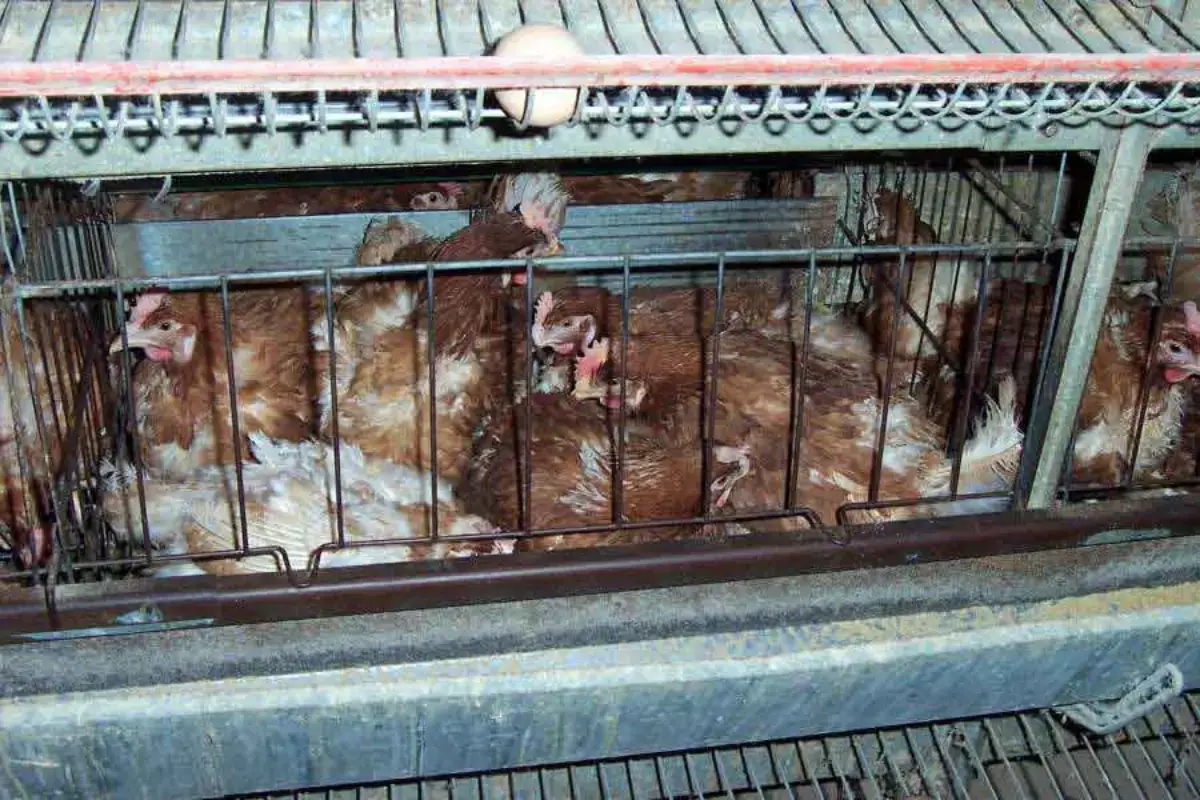
By far the most commonly farmed land animal is chickens, with around 75 billion slaughtered each year. Broiler chickens, which are used for meat production, are selectively bred to grow so rapidly that many suffer from painful deformities, lameness, and heart problems, with some unable to walk by the end of their lives. Many do not even make it to slaughter—and those that do face a terrifying and painful slaughter process. Egg-laying hens are also subject to deeply worrying practices, typically confined in cramped battery cages where they can’t spread their wings or turn around, and their chicks commonly undergo beak trimming without anesthesia.

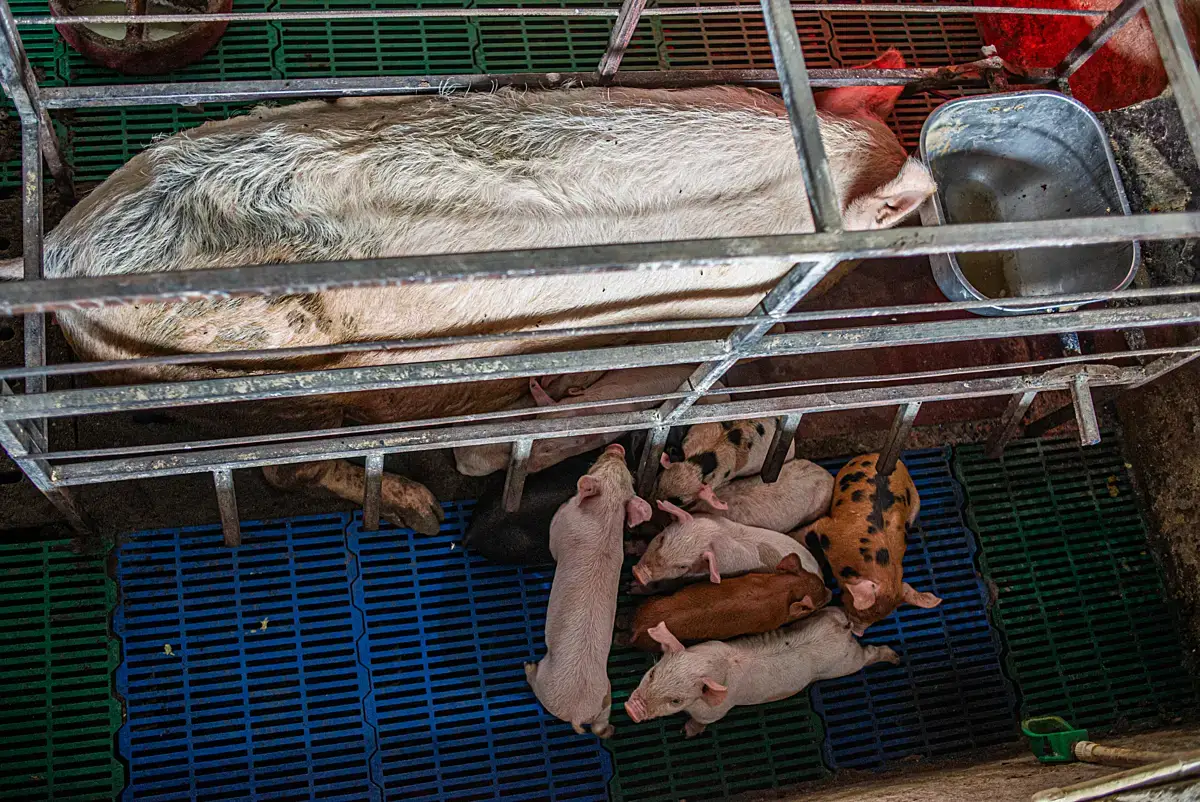
Pigs are the second-most farmed animal, with approximately 1.5 billion slaughtered globally each year. Female breeding pigs face particularly harsh conditions; in many countries, they’re confined in gestation crates so small they cannot turn around for the duration of their pregnancies. Even in countries with better regulations, farrowing crates remain common. These confine mother pigs for several weeks after birth while they’re with their piglets, and pose significant impediments to their ability to perform basic behaviors. On top of this, male pigs are castrated and piglets routinely have their tails docked often without the use of anesthesia to mitigate the pain.
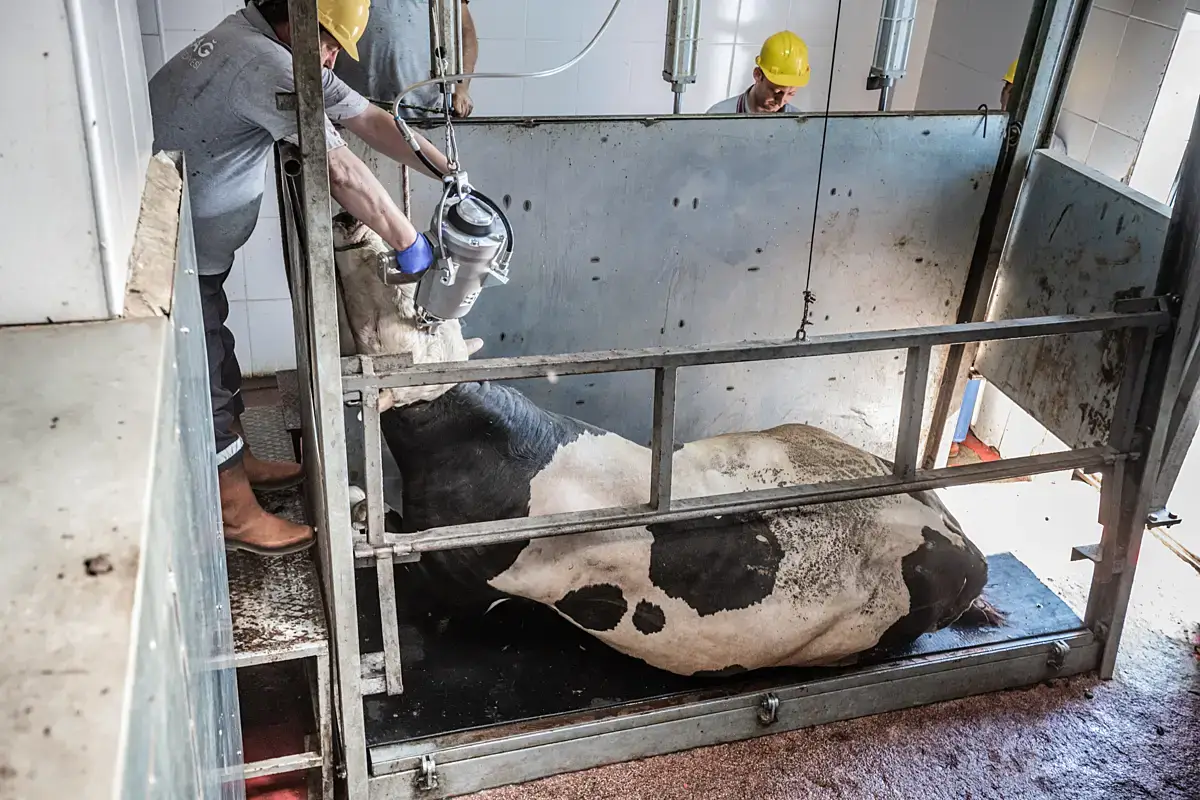
Turning to cattle, over 300 million cows are slaughtered annually for beef and dairy production. Dairy cows often face intensive breeding schedules, requiring them to be regularly inseminated to maintain milk production. In most cases, mother cows are separated from their calves, which causes distress to both the mothers and calves. The intense milk production also causes frequent painful infections, like mastitis.
Cows also face intense suffering at the time of slaughter. Though some countries require stunning of cattle before slaughter to render them unconscious, many do not. And even within countries with laws on stunning, religious practices that discourage stunning mean that a significant portion of animals are often excluded from these requirements.
Fish and crustaceans
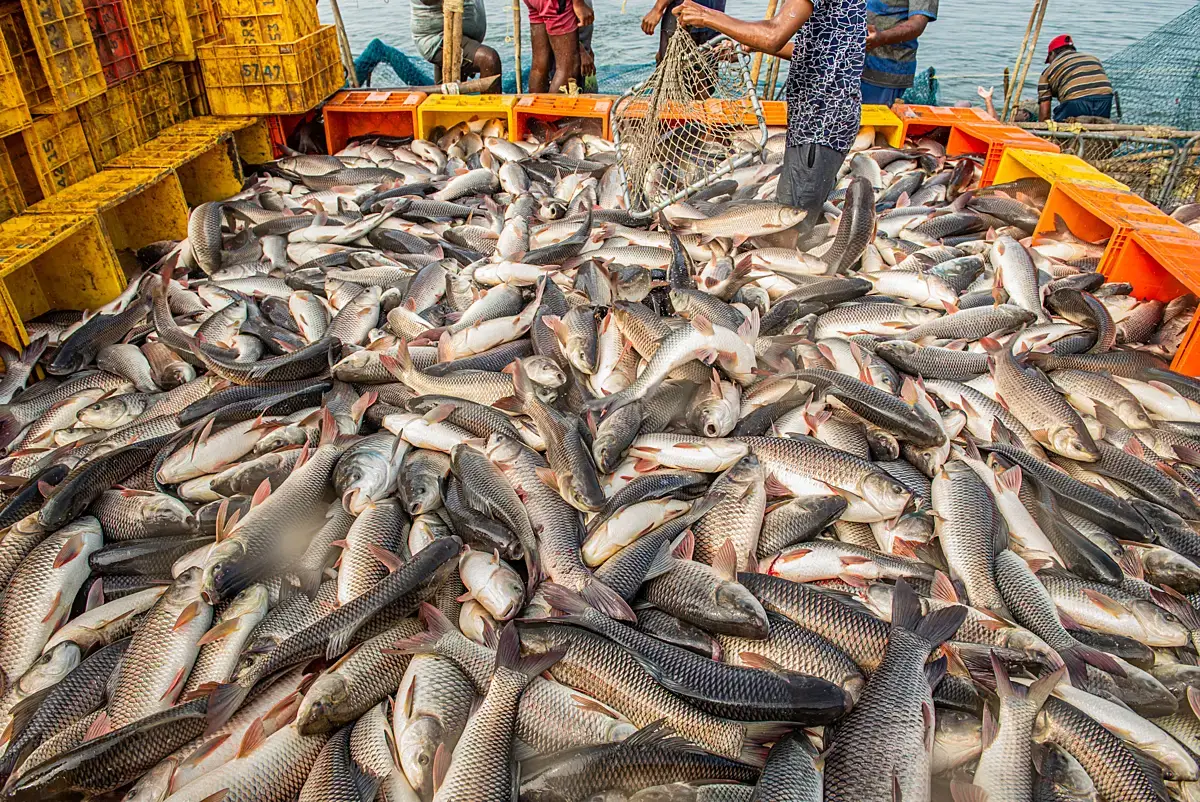
Fish and crustaceans are often overlooked, but they constitute an enormous portion of farmed animals. Over 130 billion farmed fish are slaughtered each year, and essentially all of them are raised in farms, many with practices resembling factory farms for land animals. Farmed fish are subject to a host of issues like high stocking densities, poor water quality, disease, and an inability to express natural behaviors. Given the incredibly limited welfare laws for fish (even compared to land animals) it should be no surprise that the welfare conditions for these fish are often poor.
But the most acute suffering occurs at slaughter. The most common slaughter methods, including asphyxiation (suffocation in air), and freezing to death in ice slurry, cause prolonged suffering, with asphyxiation specifically causing around 10 minutes of intense pain per fish. Combined with the scale of fish farming, this paints a bleak picture.
Shrimp farming operates at an even more massive scale; current estimates suggest over 400 billion shrimp are killed each year. Despite these enormous numbers, similar welfare concerns to farmed fish, as well as a plausible evidence of a capacity to feel pain, they receive minimal advocacy attention.
Insects
More speculatively, there is an emerging awareness of potential welfare concerns for farmed insects, which are typically farmed for animal feed, pet food, and some limited human consumption. The most commonly farmed insects appear to be black soldier flies and mealworms. Though caring about insects is counterintuitive to most of us, because so many insects are raised and killed—likely over 1 trillion per year—the stakes are large. If these insects do in fact experience suffering, such as through suboptimal stocking conditions or common slaughter methods then the welfare of farmed insects may be a significant moral priority. Needless to say, there is enormous uncertainty about the sentience of insects; considerably more than other farmed animals we’ve covered. However, their sheer number makes this an issue worth paying attention to.
What’s being done to help farmed animals?
Corporate campaigns. Large-scale purchasers of meat and dairy have significant leverage over the welfare standards they require from producers. Persuading these corporations to purchase only higher-welfare products significantly reduces demand for the worst factory farming practices. This approach has had considerable success, especially in reducing cage egg production.
Organizations like The Humane League and Compassion in World Farming have secured thousands of significant cage-free commitments from important producers. These campaigns have resulted in 150 million fewer hens caged today than a decade ago in the US, Europe, and UK, despite increased egg consumption.
Working with producers. Though there is an inherent cruelty to treatment of farmed animals, most producers of animal products don’t want their animals to suffer; it’s primarily an unfortunate byproduct of industrial-scale animal farming. Because of this, many producers are receptive to implementing higher-welfare farming and slaughtering practices.
These improvements are limited, as economic incentives often pull against higher welfare standards. However, in cases where welfare improvements align with the incentives and goals of producers, success can be had. For example, the Shrimp Welfare Project has helped a huge number of shrimp through advising producers and providing electrical stunners to reduce pain in the slaughtering process.
Shaping public demand. Something that underpins all of the above is public demand: the purchasing decisions of people that consume animal and dairy products (or choose not to). A common approach here is to reduce demand for animal products through highlighting welfare and climate issues associated with them, and increasing demand for high welfare, or non-animal-derived products.
Alternative to animal products. An approach related to shaping consumer demand is the creation of alternatives to animal products, particularly proteins. These can offer like-for-like alternatives to standard animal products for people less inclined to reduce their consumption of meat and dairy. A large industry has arisen around the creation of plant-based and cultivated meat hoping to compete with conventional products.
Policy. When successful, policy changes can create significant improvements for huge numbers of animals at once (within the country or region in question). Importantly, legislation can achieve more substantial wins than other approaches, since they don’t rely on voluntary corporate action or consumer decisions. For example, various US states have passed bans on extreme confinement practices. California’s Proposition 12, for example, prohibits the sale of pork, veal, and eggs from animals kept in the most restrictive confinement systems.
Legal advocacy. Litigation on behalf of animals involves holding producers and purchasers to account for failing to comply with existing welfare regulations or voluntary welfare commitments. Organizations like Legal Impact for Chickens use lawsuits to enforce existing animal cruelty laws that are rarely applied in practice, and several advocacy organizations also work in this area.
How much more could be done?
Despite all the good work being done to help farmed animals, there is enormous room for more to be done. Farmed animal welfare attracts close to $300 million a year in philanthropic funding. Though a large number on its own, it’s much lower than spending on other problems of a similar or smaller scale.
On top of this, only a tiny fraction (around 3% in the US) of total philanthropy directed towards animals is focused on farmed animal welfare, with the vast majority going towards companion animals. This means that even within animal welfare, farmed animals are highly neglected.
What this means for the promisingness of working within farmed animal welfare isn’t immediately clear, though it almost certainly means that there’s lots of impactful work that could be done, but can’t because of funding constraints. Our experience from those within the animal welfare movement suggests that many animal welfare roles are often over-subscribed and highly competitive, implying that many more talented people could enter this space with more funding. This might mean that effective giving is particularly important here than in other cause areas. However, there still exist talent gaps, too, perhaps especially in leadership roles and entrepreneurship.
Nonetheless, we suspect that many of the best opportunities for impact may exist within large institutions like governments and international organizations. These organizations are able to absorb many people interested in animal welfare, and there’s a strong case for counterfactual impact within them, since most people who enter roles in these organizations won’t have a focus on helping animal welfare at scale.
What can you do?
Despite the promising work being done to reduce factory farming and increase animal welfare, there’s lots still to do. How can you get involved?
Career options
If you’re wanting to use your career to improve farmed animal welfare, there are a few key types of organizations where you can work
Advocacy organizations. There are a host of organizations whose primary focus is to help farmed animals through corporate campaigns, political lobbying, and public outreach. These organizations need all sorts of skillsets, including operations staff, fundraisers, field workers, communications professionals, as well as experienced managers. Organizations that work in legal advocacy also have roles for qualified lawyers, as well as other support staff.
Research organizations. Other organizations focus less on direct advocacy, and more on conducting and publicizing research. This research helps inform the work of animal advocates, influences grantmaking decisions, and can also directly persuade decision makers. A few such organizations include Faunalytics, the Welfare Footprint Project, and Rethink Priorities. Naturally, these organizations are good options for people interested in research careers, but much like advocacy organizations they also need a host of support staff to function.
Government and international organizations. Governments and international organizations, such as the EU, have the sole authority to set legal standards for the treatment of animals, both for the animals within their borders, but also for imported animal products. Our sense is that these organizations could be a particularly promising route for people with backgrounds in welfare research or veterinary medicine, which are often prerequisites for policy roles or more senior inspection and auditing jobs. Despite the huge influence of these institutions, roles within them are often overlooked.
Academia. Academic research can have a real influence on important policy decisions and public debates around animal welfare. For instance, academic research on animal sentience played a crucial role in influencing the UK’s 2022 Sentience Act, which provided landmark welfare provisions for various animals. Academic experts are also often invited by governments and international institutions to provide advice on policy.
Things you can do outside of your career
Donate to the best charities. Farmed animals receive only a tiny fraction of total charitable funding given to help animals, meaning that organizations in this space are often constrained by a lack of funding. If you want to find the most cost-effective organizations working to help farmed animals, the recommendations made by Animal Charity Evaluators and the EA Animal Welfare Fund are a good place to start.
Volunteer or participate in advocacy. Even if you’re not working formally within an advocacy organization, you can still get involved. For instance, you can attend advocacy events, write to your local politicians, or consider volunteering for an animal welfare organization.
Change your purchasing decisions. On a smaller scale, you can choose to purchase and consume alternatives to animal products, like meat, dairy, and leather. If widely adopted by the public, the impact of this would be substantial, leading to far fewer animals being bred and killed. The individual impact of this is likely only moderate, but not inconsequential; forgoing meat could save an average of 28 chickens a year on an average Western diet.
Recommended resources for taking action
Fellowships and internships
Here are a few great recurring opportunities for those who are interested in farmed animal welfare careers, and are early-career or still studying:
- The Humane League often runs fellowships for people wanting to build a career in animal advocacy, and also has a volunteer program.
- The New Roots Institute runs an annual leadership development program for prospective farmed animal advocates. Participants may then enter their follow-up internship and fellowship.
- Mercy for Animals runs regular internships for law students and professionals to work on legal advocacy for animals.
Communities
Animal advocacy organization Hive runs an active Slack channel for thousands of animal advocates. We’d recommend it for people looking for both advice and opportunities to grow their network within animal welfare.
Online courses
These are courses that have been recommended to us by experts, or look like particularly good ways to upskill for working to help farmed animals:
- Animal Advocacy Careers runs a free introductory course for animal advocacy, which provides actionable advice for starting a career in this space.
- The Animal Justice Academy is a free course featuring a self-paced animal advocacy course as well as live panels & workshops.
You can also explore
- Our article on animal welfare.
- Factory farming – 80,000 Hours
- How many animals are factory farmed? – Our World in Data
- Meat and Dairy Production – Our World in Data
- Repository of animal welfare research – Faunalytics
- Why Farmed Animals? – Animal Charity Evaluators