“The ability to do important new work comes largely from knowing the field extremely well. You need to know many of the things that have been tried and done. It’s only by digging deep into that that you can see where a real gap is, and something that can be addressed.”
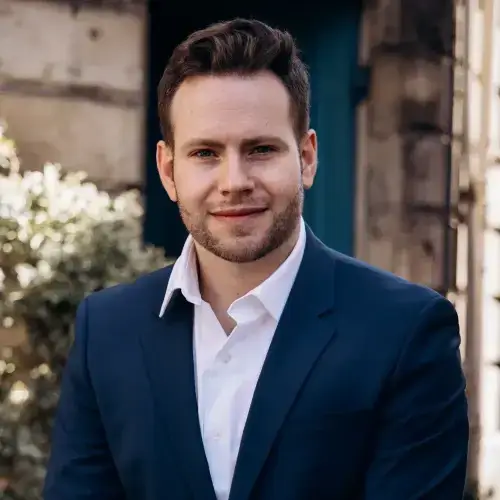
Danny Bressler is an assistant professor in the economics department at Bentley University, where his work most prominently focuses on the mortality impacts of climate change. His research has been influential, having been covered widely in the mainstream press and even cited in a Supreme Court case.
Before ending up in academia, Danny worked as a management consultant, spent two years as a research assistant at Harvard Business School, and even interned at The Onion. He then completed a PhD at Columbia, taking a year out in the middle of it to serve as an economist at the White House Council of Economic Advisers.
We were really excited to talk to Danny about his career so far — including how he ended up working on an important but neglected topic in climate change, the things he learned from consulting, and his time working in the White House.
What does your day-to-day at Bentley look like at the moment?
My day-to-day depends on the time of year. We’re in summer right now, which is really good, because I can focus on research more than anything else. I don’t have any teaching duties. At Bentley I teach two classes a semester, and I teach the same class twice, which is good, because it maximizes the time you get on your research.
I work a lot out of coffee shops, because my office is a 30-minute bike ride from here, and I live in Cambridge, where there are lots of great coffee shops. I don’t wake up that early. Maybe I start working at 10, sometimes 11, then work until 6 or 7 on research, then go to the gym. And I have a son now, so that means I need to come back a little earlier. During the school year I go into Bentley two or three times a week to teach and do other things.
How did you end up in academia, and what was it that appealed to you?
A bunch of things. When I first left Brown, my undergrad, I joined a consulting firm, and a big reason I joined was that they had a clean technology practice. I was an economics and history major, and I was interested in sustainability: how do you continue the human project going forward in a robust way? Then I joined the firm, and they got rid of the clean technology practice about four days after I started.
That made me realize that in the private sector you can work on different things, but you’re very subject to the whims of what makes money and the direction your firm goes, unless you start your own firm. I was always interested in research, and something that really appealed to me about academia is that it’s very entrepreneurial, in my view. It depends on your field to some degree. If you’re in more of a lab field, you might have to do whatever your lab is doing. My wife did biology, and there you have to do whatever your PI is doing. But in economics you’re pretty free to choose the topic you want to work on, and to pivot. You try things out, see what works and what doesn’t, and try new things. That’s pretty exciting.
I was also very passionate about these topics. It was never just environmental or sustainability work for its own sake. I was interested in all the things that impact human welfare, and the risks that could derail this great amount of welfare we’ve been producing over the last few hundred years. So that’s why I went into academia.
Were there any positive things you took from your experience in consulting?
Big time. When I was in college I thought I knew what it was to work hard, but it turns out I didn’t. I did well in college, but I was definitely not the most efficient. I’m still not perfect, I still struggle with that, as I think everybody does. But in consulting I learned a better work ethic. I had to work very long hours, and a lot of it was working very hard, and working with teams, which was very useful.
As a management consultant, your job is to think about business problems, break them down, and work with people who have a lot of experience. Especially as a new analyst you don’t know anything, and you’re working with people who have been in that industry for decades, both within your firm and at the client. It definitely helps your analytical skills and your presentation skills. I think it was great.
Another underrated thing is being able to make a little bit of money before you go into a PhD. I was living in Manhattan on a low-$30k salary at the beginning of my PhD and it was in the low-$40ks by the end. As a PhD student you want enough money to pay rent, eat, and not worry about things too much. If I didn’t have that little bit of cushion, it would have been a lot more challenging.
Before the PhD you did a research assistantship at Harvard. How helpful was that?
I went into consulting right after college, and then I was looking at a bunch of different jobs, including venture capital. I still think about what my life would be like if I’d stayed in venture capital in SF, if I’d gone in that direction in 2015. But I ended up working for a professor at Harvard Business School named Michael Porter. He’s what you could call a celebrity professor, at least at that time. He publishes a lot of things for practitioners, he’s very well known, and at that point in his career he was attempting to reach a general audience more than an academic one.
My thought process was that this was halfway between the private sector and academia, because he was focused on public and business questions rather than purely academic ones. I figured I could always go back and do venture capital or something a few years later if it didn’t work out. But if it did work out, I’d go into academia. That’s how I thought about it; I think that’s rare. A lot of people do these RA-ships right out of college, because they already know they want to do academia.
I’ll say that things have changed. When I did it, over 10 years ago now, an RA-ship was optional and helpful. Now I think it’s becoming pretty much mandatory to get into a top economics PhD program. It’s unfortunately an arms race, where they just expect you to do an RA-ship, and that extends the timeline for everyone. Thirty years ago, maybe you could go into a PhD straight out of college, take five years, and be an assistant professor at 27. Those days are over, unfortunately, because at the end of the day we want to be able to move on with our careers and not have things drawn out. So it was definitely helpful, and my understanding is that it’s becoming necessary in economics.
You applied to PhD programs in 2016. Did you have a backup plan in case the PhD plan didn’t work out?
Definitely. This goes back to 2015, when I started working at Harvard Business School. As I mentioned, I was very interested in sustainability, but I’d also seen stuff from Nick Bostrom on YouTube when I was in college, and I came across his framework for thinking about global catastrophic risks and existential risks.
And I thought, when I say I’m concerned about sustainability and the future of humanity, that’s what I’m concerned about. I’m not necessarily interested in environmental stuff intrinsically, or because I’m concerned about whales or polar bears. I want people in the future to be able to live good lives, and that’s why I’m concerned about these things.
Then, when I was in Cambridge, I got to know the community thinking about these problems a little. I went to an 80,000 Hours workshop in 2015. I realized there were other people interested in these topics. So I thought, what if I just wrote a book on this? I started working on a book in 2016. I contacted some people, including Toby Ord, and found out he was writing a book in essentially the same area, which became The Precipice.
I didn’t get that far with mine. I was passionate about the topic, some people had written about it, and I thought I could try to write something too. I got a literary agent and all that. This was before my PhD. But then I realized it was probably better to get more expertise and credentials, and then maybe come back and do that sort of thing with more expertise behind me. So I never really gave up on it, I just put it on hold. A number of the books chapters ended up being spun off into different articles, e.g. this article on engineered pandemics (published in 2018) and this book chapter started off as chapters from my book, but I worked with coauthors to turn them into something much different later.
But writing a book isn’t a job. I applied for a bunch of PhDs, and if I hadn’t got into them I could have stayed at Harvard Business School for another year and tried again, or gone back into the private sector. I was in a job where I could just continue, and that made it nice.
It sounds like you’ve taken a mission-first view of your career, rather than treating academia as the goal in itself.
Mission-first is always how I’ve viewed it. I was never an academic for the lifestyle of being an academic, or whatever drives a lot of people. I was always interested in the work and in these types of issues, and I wanted to help with them and find the best way to help. That’s what drew me to academia, and I felt like I could work on research but also on policy and things like this.
In your PhD you ended up focusing on climate change and heat-related mortality. How did that come about?
I started the PhD, and like I said, I was always interested in these large global catastrophic risks. For a long time my view was that with climate change there are so many people working on it that I should work on other things. I was thinking about the neglectedness aspect, and climate didn’t seem very neglected. That was my thinking for a while. So I was very interested in working on nuclear issues instead: nuclear proliferation, nuclear weapons, war. I did work on that, and I’ve published some things on it.
The thing I wanted to do was nuclear winter, which is also climate change, just going in the other direction and with another mechanism, stratospheric aerosols, where a lot of material goes up into the stratosphere and cools the planet. In my coursework I’d learned about some of the methods in environmental economics.
This was my first year of the PhD, and William Nordhaus won the Nobel Prize in my second year, but I was already pretty familiar with his work in my first year, on the DICE model. That’s a way economists integrate climate and climate impacts into economic modeling, to estimate the social cost, or externality cost, of adding a ton of carbon dioxide.
I thought, this is an integrated model of climate and the economy, you could totally use this to think about nuclear winter. Because you want to think about nuclear winter in a complete way: the environmental impact of nuclear winter, the direct impact of nuclear war, the impact that might have on economies, and then this additional externality of global cooling. You could use a similar methodology.
So how did you get from nuclear winter to climate change mortality?
The first thing I did was ask how the model deals with mortality, because I knew there was a large literature on climate mortality at that point. I looked into it, and it didn’t deal with mortality. And I thought, “what do you mean it doesn’t deal with mortality?” Then I realized there’s this damage function that’s supposed to be inclusive of all these climate impacts, but when you actually look at the individual studies that underlie it, almost none of them account for mortality at all. And all the different studies were looking at different things. It was an apples-to-oranges comparison, and they were all getting lumped together into a single damage function. I thought, “wow, this is the thing?”
So I decided I should at least start by putting mortality into it, just for climate change, before going on to nuclear winter. And I guess I never left that step. My thoughts going in were that so many people were working on this, that it wasn’t neglected at all and all the important things were done. Then I started looking at it even a little bit, and that wasn’t true at all. This was in 2017, 2018, and it’s changed dramatically since then. But back then, almost 10 years ago, it was wild. I was so surprised.
Your year at the White House came in the middle of the PhD. Did you take time out for it, and how did it come about?
I took a leave of absence. There are something like 23 or 24 components within the White House, which is technically the EOP, the Executive Office of the President. The Council of Economic Advisers is one of them, and they have this role, the staff economist role, which is specifically made for PhD students taking a leave of absence from their PhD. When I was there, all my colleagues at that level were taking leaves of absence from their PhDs. Most people take a year off, and I took a year off.
It was completely random. I wasn’t looking for it. I’d met a guy named Noah Kaufman a few times. He was at Columbia, at a research institute called CGEP, an energy research institute there. He’d given a seminar talk, and I’d had lunch with him and other people as part of the seminar, so we’d met a few times. He ended up getting hired as a senior economist for climate. There was a climate group within the Council of Economic Advisers, which existed back in the Biden administration. He wanted a staff economist, and he was familiar with my work. A big thing was that they were going to work on updating the social cost of greenhouse gases, or the social cost of carbon, and he knew I was working a lot on that.
So he reached out. It was totally not on my radar; I hadn’t thought about it at all. This was during COVID, the beginning of 2021. I thought, “wow, this is interesting”, and then I interviewed, and there you go.
That’s pretty serendipitous, given it was exactly what you’d been working on. What was that role like compared to the PhD?
I enjoyed it a lot. It was completely different day-to-day, because I wasn’t doing my own research anymore. I was working on a number of policy processes. I worked on the social cost of greenhouse gases update and a bunch of other issues, including benefit-cost analysis, the guidelines for how the government does its benefit-cost analysis. There’s a thing called Circular A-4, and a bunch of other things within government. Things are always incoming, and you have to do quick research on them to help people across government. Some of these processes went on for many months, like the social cost of greenhouse gases. So it was completely different; I did basically no research during that time.
How did you find the academic job market?
I ended up taking seven years for my PhD, and I did the White House year on top of that, so it was eight years of calendar time. A lot of that is because the economics job market is so competitive, and I wanted to be as prepared as possible for it. My strategy during the PhD was to try to get a lot of publications, which is pretty rare in economics, where people usually focus on the job market paper. I thought, I’m going to do so much research, I’m going to have a lot of publications, and the job market paper will come out of that. And that did happen.
But I do feel like if I’d just gone on the job market with my mortality cost of carbon paper, which came out in 2021, right after the fourth year of my PhD, it probably would have been really successful, and I’d be an assistant professor much earlier. Instead I wanted to get all these other things under my belt. Although that counterfactual isn’t really plausible, because you can’t really go on the market after your fourth year. Still, I spent so much time trying to make sure everything was perfect. And the White House made the timing complicated too. At least for me, maybe I could have moved faster in terms of going on the job market quicker.
How do you prioritize what topics to work on? Funding and the popularity of different topics can often push against doing the most impactful work.
It’s really challenging. Working with Michael Porter, his whole thing was competitive strategy, and one of his taglines is “compete to be unique.” His point of view was that if you’re just trying to copy everything everyone else does, it actually ends up being much harder for you, because you’re trying to do the exact same thing as 50 other people. Now you have a ton of competition, and you’re competing on the same axes.
But if you think about what would be new, in academia it needs to be related to what people are already doing. You can’t just do something completely new. It needs to be grounded in your discipline, and there need to be good standards of evidence for what you’re doing. You’re not just an opinion writer. You need methodologies that can produce credible knowledge, and that requires you to really know how that’s done, and to know your field very well.
For me, the ability to do important new work comes largely from knowing the field extremely well. You need to know many of the things that have been tried and done. It’s only by digging deep into that that you can see where a real gap is, and something that can be addressed. When I dug into the DICE model and asked where mortality was, that was only possible after thinking about it for months and reading a lot. You can’t just walk in and contribute to some field or area without getting to know it really well. So get to know the area very well first, and then think about what the gaps are.
I definitely think about things from first principles, and in terms of gaps, more than a lot of people do. I think a lot of other people are thinking, these people did this, so what’s something I can do that’s very similar? I’m much less like that, because I’m driven by being really interested in these topics and wanting to address them, so I try to learn all the things that have been done around the topic. That ends up being pretty interdisciplinary.
Take temperature-related mortality. Epidemiologists, certainly in 2017, were doing way more on it. Antonio Gasparrini and his colleagues had been working on this for a decade. Their work said, “hey, we know a lot about this”. But until 2021, when I wrote my first paper that extended the DICE model to include the impact of climate change on mortality and also to calculate the mortality cost of carbon, that epidemiological work hadn’t made its way into the DICE model yet. Probably in large part because the people making the models didn’t read the epidemiology literature. So a lot of the time, thinking about the topic in more than the discipline can be helpful.
I have to ask about The Onion, which is a striking line on your CV. How did that come about?
That job was completely random. It was an internship for about three months over a summer. I can’t even remember how I found it, I think it was word of mouth, a friend of a friend. They were looking for an advertising operations intern. This was 2010, so I’m sure the technology has changed enormously since then, but essentially we were advertising on the Onion website, selling ads, geo-targeting them, all that.
I also got to manage their trailer site, which was called Coming Distractions. I was supposed to reach out to people and get trailers to put on the website. And I accidentally premiered the trailer for Howl, the movie about Allen Ginsberg with James Franco. I was kind of the fall guy, because the trailer person from the indie film company just gave it to me, and people were always giving me trailers, and if you give me a trailer, I am going to put it online, that’s my job. So they gave me the trailer, I put it online, and they said, no, don’t do that, it hasn’t premiered yet.
I guess I agreed to be the fall guy. This was so long ago, who cares, I can say it publicly now. They wrote an article saying, “our intern Danny accidentally premiered this trailer“. I guess I kind of did, but I could have just said I wasn’t told it wasn’t supposed to premiere. Anyway, I kept working with them after that. They wanted me to keep updating the trailer site, so I did that in my junior year of college, and they paid me a little bit to do it.
It’s good to set the record straight after all these years!
Explore further
Want to figure out how to have more impact in your own career journey?
Check out these articles and resources.